🌱 May Update from the Plot — Wind, Birds and Signs of Summer
A visit to the allotment today really showed how quickly things can change in May. The plot is suddenly starting to feel alive and productive again, with fresh growth everywhere and the first proper harvests coming home to the kitchen.
The biggest surprise was probably the broad beans — or rather the lack of them! I suspect the local gangs of jackdaws, crows and wood pigeons may have beaten me to the tender young shoots. The seeds themselves were protected beneath the soil, but once those soft green tips emerge the birds can make very quick work of them.
It was a useful reminder that on an exposed plot, timing and protection matter just as much as sowing. The peas I planted today will definitely be getting some fleece or netting protection before they emerge. Around the allotments the birds are constantly watching freshly worked soil and newly planted rows.
Still, this is all part of learning the rhythms of the plot. After a few seasons you begin to understand your own conditions better — where the wind hits hardest, which beds warm first, where moisture stays longest and which crops genuinely thrive in your microclimate.
One thing that has become very clear is that wind protection is absolutely vital here. Courgettes and cucumbers can actually grow extremely well in our long northern daylight hours, but the exposed coastal winds can batter plants and slow them dramatically unless they have some shelter.
The courgettes under the grow light are already producing their first true leaves and the cucumbers are growing rapidly too. Some will go into sheltered kitchen garden planters at home, while others may be experimented with in grow sacks, barrels and possibly one rich no-dig bed at the allotment itself.
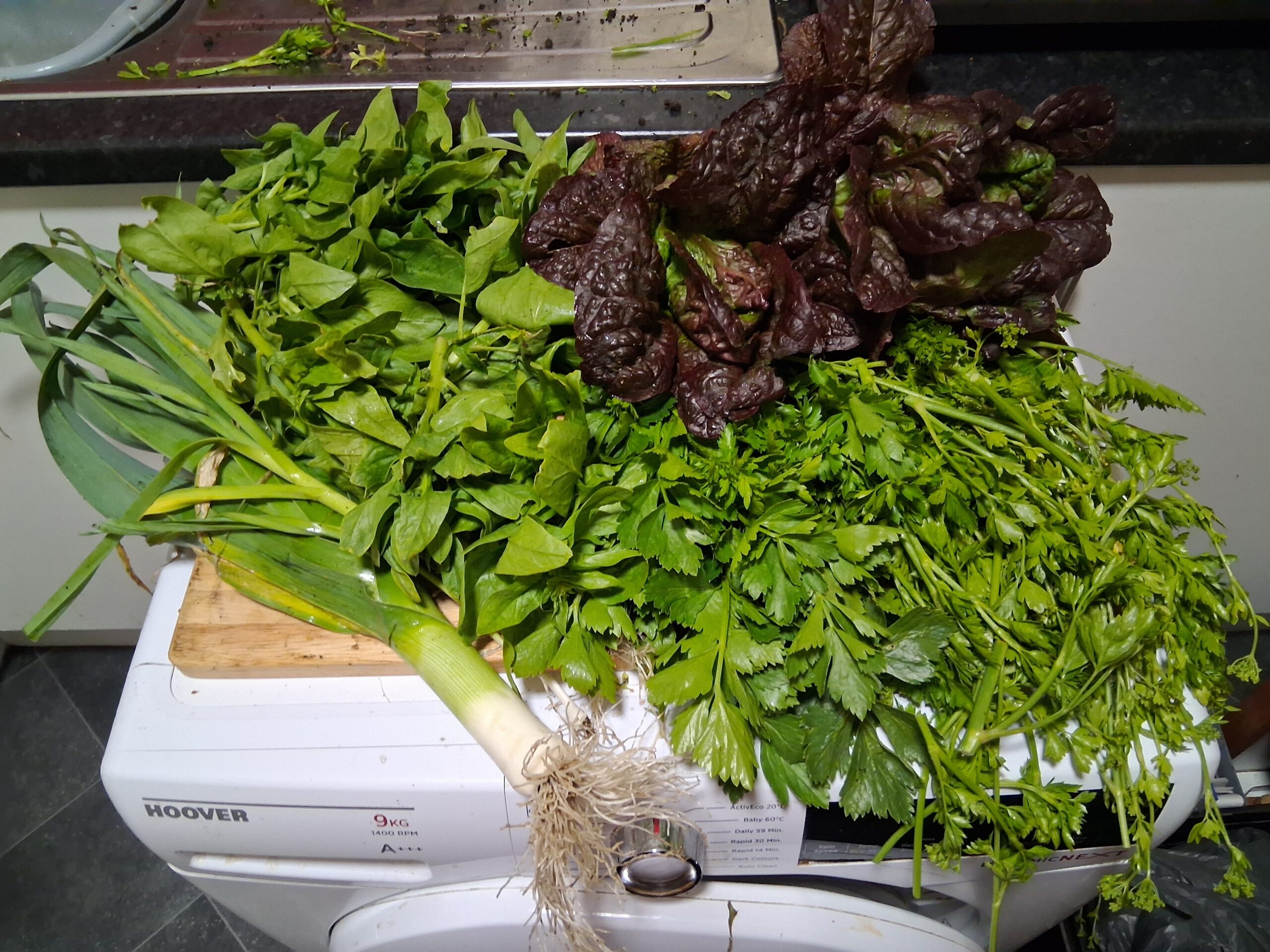
Today’s harvest was a reminder of how rewarding leafy crops can be in cooler Scottish conditions. The Marvel of Four Seasons lettuce grown in a mulched barrel performed brilliantly, producing beautiful deep red heads with excellent flavour and texture. The lettuces were harvested by cutting at the base rather than pulling the roots entirely — a simple no-dig friendly approach that leaves the soil structure undisturbed.
There was also a large harvest of spinach, parsley, leaf celery and leeks. Much of the spinach and celery leaf had started to bolt, so it was cut back hard before flowering progressed too far. The flat-leaf parsley in particular has become extremely productive and may now be destined for soups, salads, freezing and perhaps even parsley pesto.
The allotment is now entering that exciting stage of the season where everything begins accelerating rapidly. One week beds can look quiet and sparse, and the next they are overflowing with seedlings, leaves and fresh harvests.
It’s never a perfect system, and plans constantly evolve depending on weather, birds and what the plot itself is telling you. But perhaps that is exactly what makes allotment growing so rewarding.