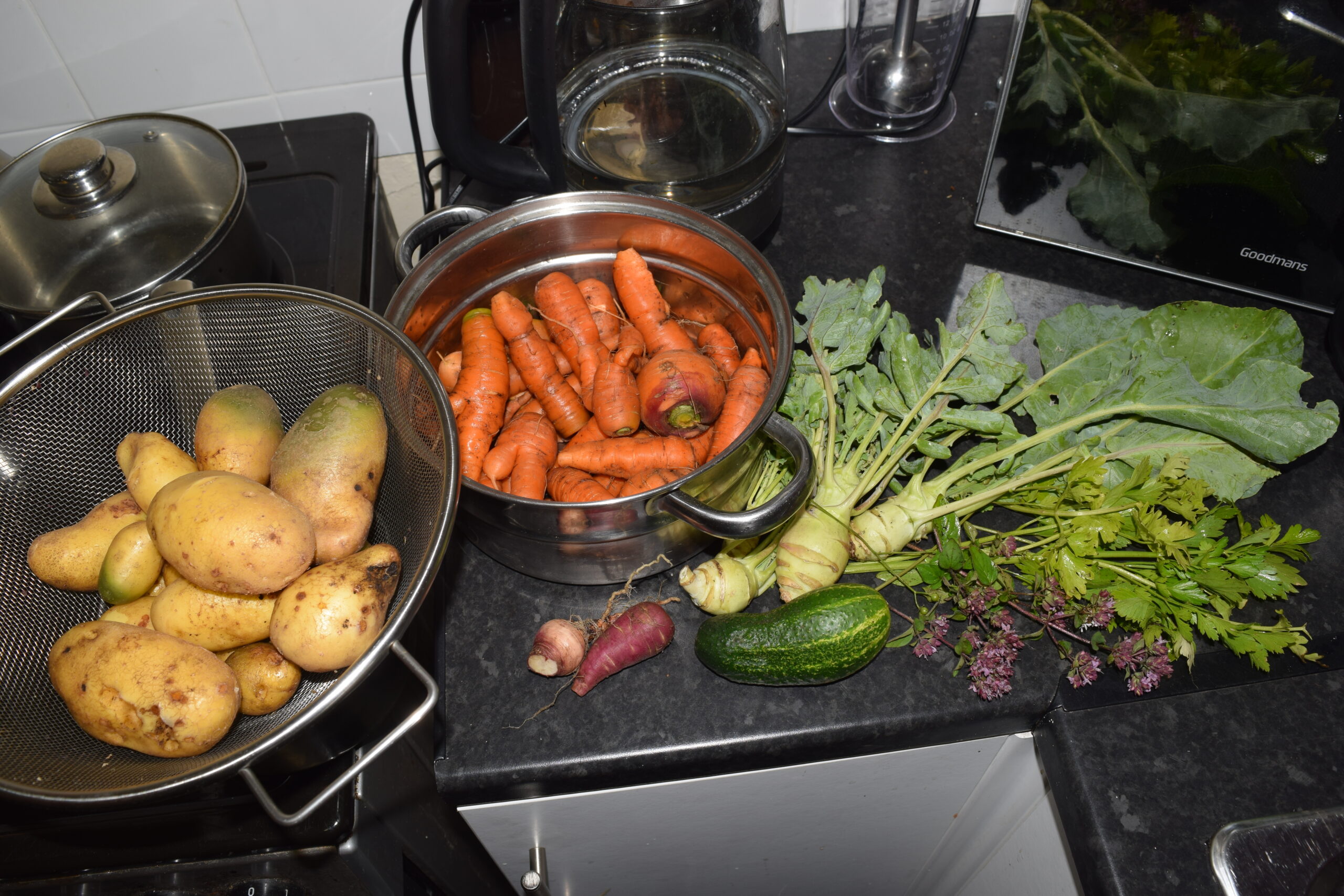
Here’s a handy list of the main botanical families of the common vegetables that I grow on the allotment. Knowing the family group will help you with deciding on crop rotation and the conditions suited to that family of vegetable.
🥬 Brassicaceae (Cabbage Family)
- 🥬 Cavolo nero (kale)
- 🟢 Kohlrabi
- ⚪ Turnips
- 🥦 (future: broccoli, cabbage, sprouts)
👉 Notes:
Heavy feeders • Love firm soil • Net against pigeons & butterflies
🧅 Amaryllidaceae (Onion / Allium Family)
- 🧄 Garlic
- 🧄 Elephant garlic
- 🧅 Leeks
- 🌿 Garlic chives
👉 Notes:
Good companions • Help deter pests • Don’t like too rich soil
🥕 Apiaceae (Carrot Family)
- 🥕 Carrots (Nantes types)
👉 Notes:
Light, stone-free soil • Avoid fresh manure • Watch carrot root fly
🫘 Fabaceae (Pea & Bean Family)
- 🫘 Broad beans
- 🌱 Peas (all types)
- 🟢 French beans
👉 Notes:
Fix nitrogen 🌱 • Improve soil • Great before leafy crops
🥔 Solanaceae (Potato / Nightshade Family)
- 🥔 Potatoes
👉 Notes:
Heavy feeders • Rotate well • Watch blight
🥒 Cucurbitaceae (Squash Family)
- 🥒 Cucumbers (e.g. Crystal Lemon)
- 🟡 Courgettes
👉 Notes:
Hungry & thirsty 💧 • Love warmth • Need space or vertical support
🌿 Amaranthaceae (Spinach & Beet Family)
- 🥬 Perpetual spinach (leaf beet)
👉 Notes:
Cut-and-come-again • Very reliable • Good through seasons
🌻 Asteraceae (Daisy Family)
- 🥬 Lettuce (Marvel of Four Seasons)
- 🌻 Jerusalem artichoke
- 🌿 Globe artichoke
👉 Notes:
Mixed habits • Some perennial • Good for structure in plot