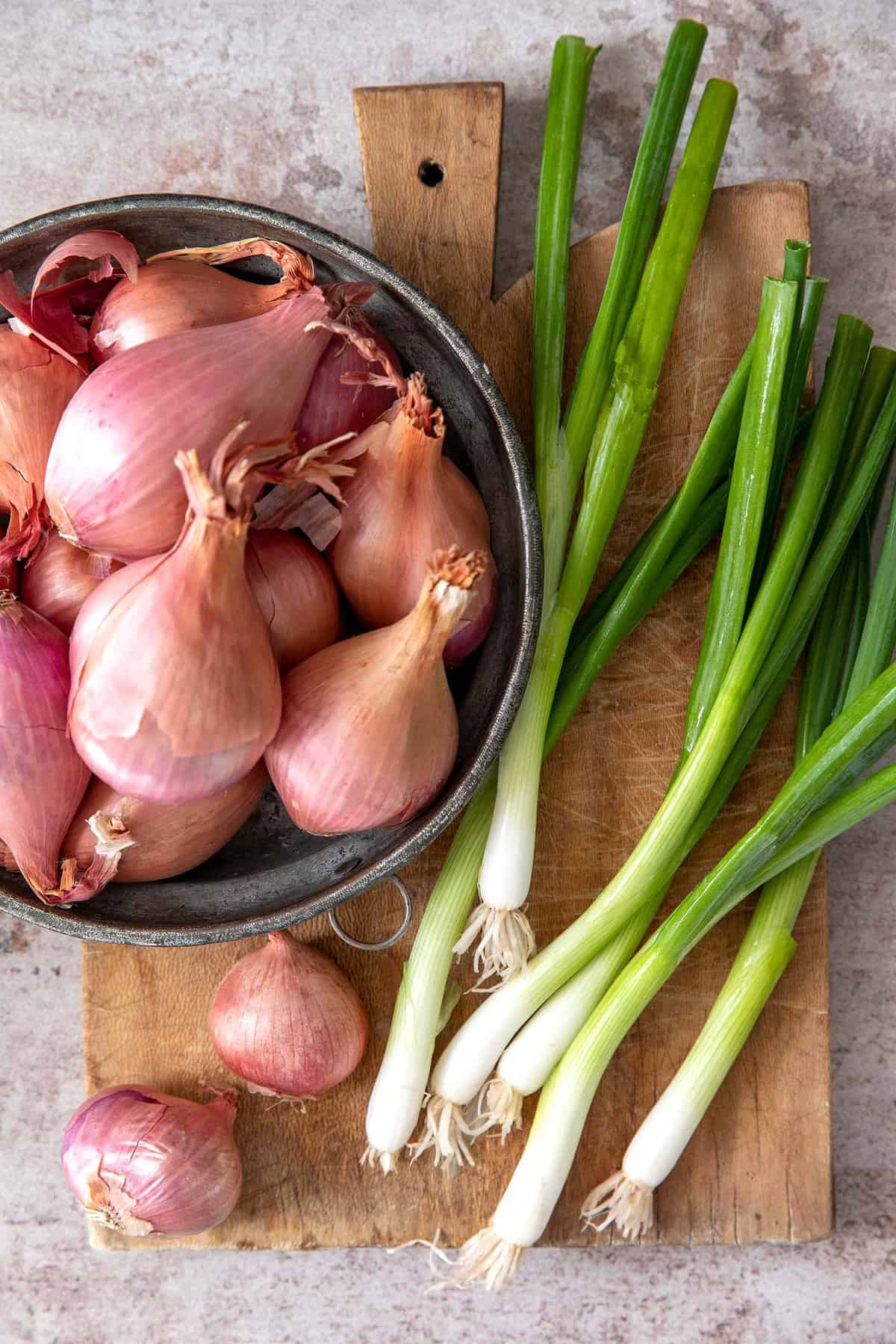
One of the realities of allotment growing is that plans change as the season develops. Crops fail, birds intervene, the weather turns windy or wet, and suddenly the carefully planned spring planting schedule slips by faster than expected.
This year I began wondering whether it might already be a little late for shallots and traditional onion sets on the plot. In northern conditions, especially around Edinburgh, bulb onions and shallots rely heavily on day length and timing. They need enough early growth before the long days of late spring and early summer trigger bulb formation.
If planted too late, they often still grow — but produce smaller bulbs and lower yields.
Rather than forcing a crop that may struggle, sometimes it makes more sense to adapt. That is where Ishikura onions come in.
🌱 What Are Ishikura Onions?
Ishikura is a Japanese bunching onion, grown mainly for its long white stems and fresh green leaves rather than for large storage bulbs.
Unlike traditional onions and shallots:
- they are far less sensitive to day length
- they grow quickly
- they tolerate cooler weather well
- and they can be sown over a much longer period.
In many ways they behave more like spring onions than bulb onions.
🌿 Why They Work So Well on the Allotment
For a no-dig or mixed allotment plot, Ishikura onions are incredibly flexible.
They can be:
- sown in rows
- tucked along bed edges
- planted between slower crops
- grown in planters or containers
- or used to fill gaps left by failed crops.
Because they grow upright and take up relatively little space, they fit beautifully into the evolving patchwork style of a productive allotment.
🌦️ Ideal for Northern Growing Conditions
Cooler Scottish growing conditions often suit leafy crops extremely well, and Ishikura onions seem perfectly adapted to that sort of climate.
They provide:
- steady growth
- long harvest periods
- useful kitchen crops
- and attractive vertical structure in the beds.
The leaves can be harvested young like spring onions or left to mature into thick white stems ideal for stir fries, soups and salads.
🐦 Flexible Growing in an Unpredictable Season
This season has already brought:
- missing broad beans
- bird raids from jackdaws and pigeons
- shifting crop plans
- and changing use of the beds.
Rather than seeing this as failure, it is really just part of learning the allotment and adapting to conditions.
Ishikura onions feel like exactly the sort of forgiving and versatile crop that suits this style of growing:
- practical
- resilient
- productive
- and easy to integrate into an evolving plot.
Perhaps sometimes the best crops are not the ones originally planned, but the ones that fit naturally into the season we actually get.