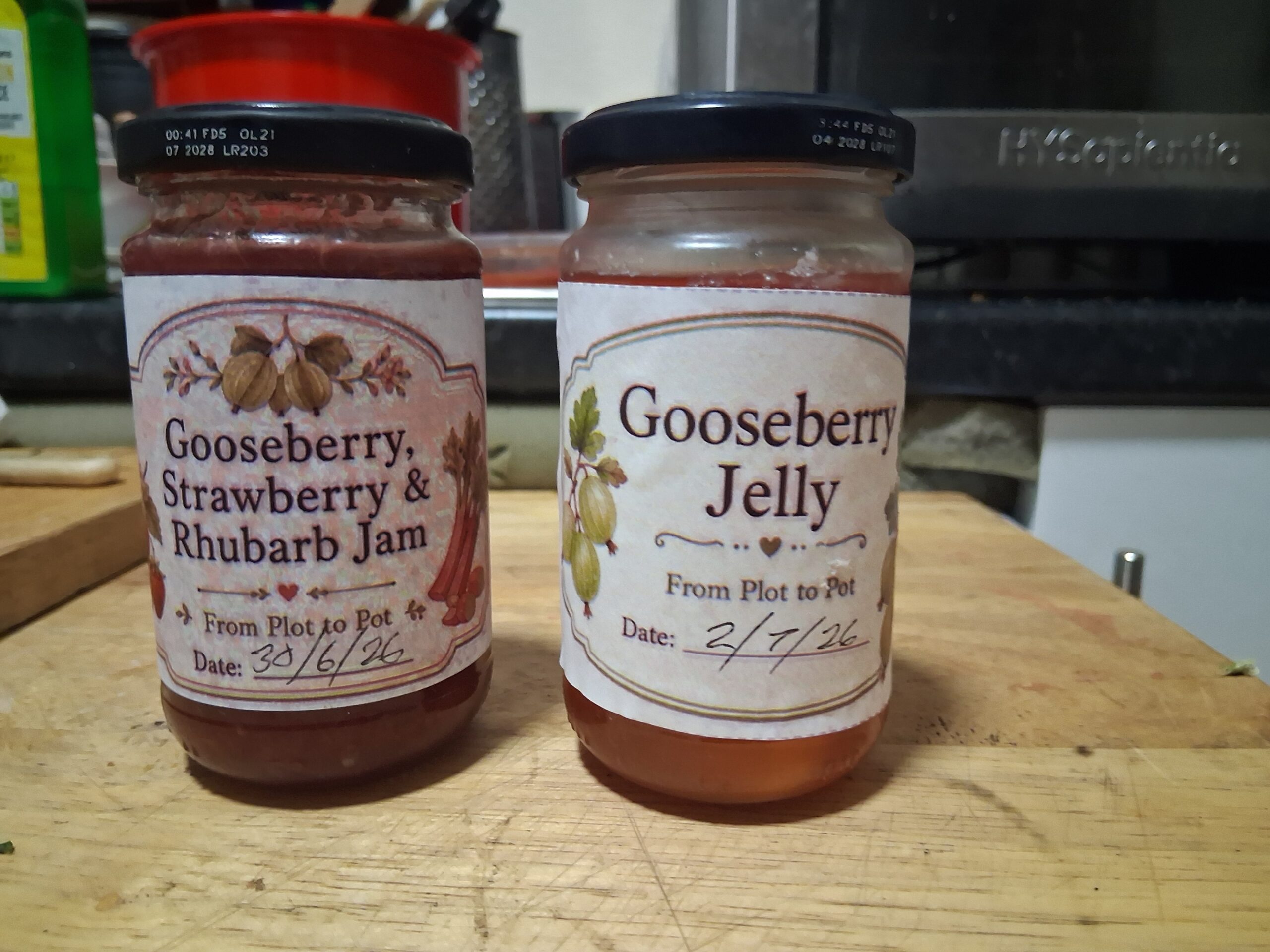
There are few sights more pleasing than a tub full of gooseberries. They may not have the instant glamour of strawberries or raspberries, but they are one of the most useful fruits on the plot. Sharp, juicy, pectin-rich and wonderfully old-fashioned, gooseberries are made for preserving.
This year’s haul gave me a few pounds of pale green berries — some large, some small, some perfect, some a little marked. That is exactly the sort of harvest that suits jelly. Unlike jam, gooseberry jelly does not require careful topping and tailing, and the fruit does not need to be flawless. Everything gets cooked down, strained, sweetened and turned into something bright, clear and delicious.
Ingredients
For every 1kg gooseberries, use roughly:
- 300–400ml water
- Sugar, measured later — about 750g to 1kg sugar per litre of strained juice
Optional:
- A squeeze of lemon juice
- A sprig of mint or elderflower while cooking, removed before straining
Method
Wash the gooseberries and remove any leaves or obvious bits of stalk. There is no need to top and tail them carefully for jelly.
Put the fruit into a large pan with enough water to stop it catching. Bring gently to a simmer and cook until the gooseberries have completely collapsed.
Mash the fruit lightly with a spoon or potato masher, then pour the pulp into a jelly bag, muslin cloth, or a clean cloth-lined sieve set over a bowl.
Leave to drip for several hours, or overnight if possible.

For a clear jelly, don’t squeeze the bag. For a more rustic kitchen jelly, a gentle squeeze is fine. I am not entering mine in a show tent, so I am not too precious about it.
Measure the strained juice and pour it into a clean pan. Add sugar — somewhere between 750g and 1kg per litre of juice, depending on how sharp you want the finished jelly.
Heat gently until the sugar dissolves, then boil rapidly until setting point is reached.
Test by putting a spoonful on a cold plate. Leave it for a minute, then push it with your finger. If it wrinkles, it is ready.
Pour into warm sterilised jars and seal.

Notes from the kitchen
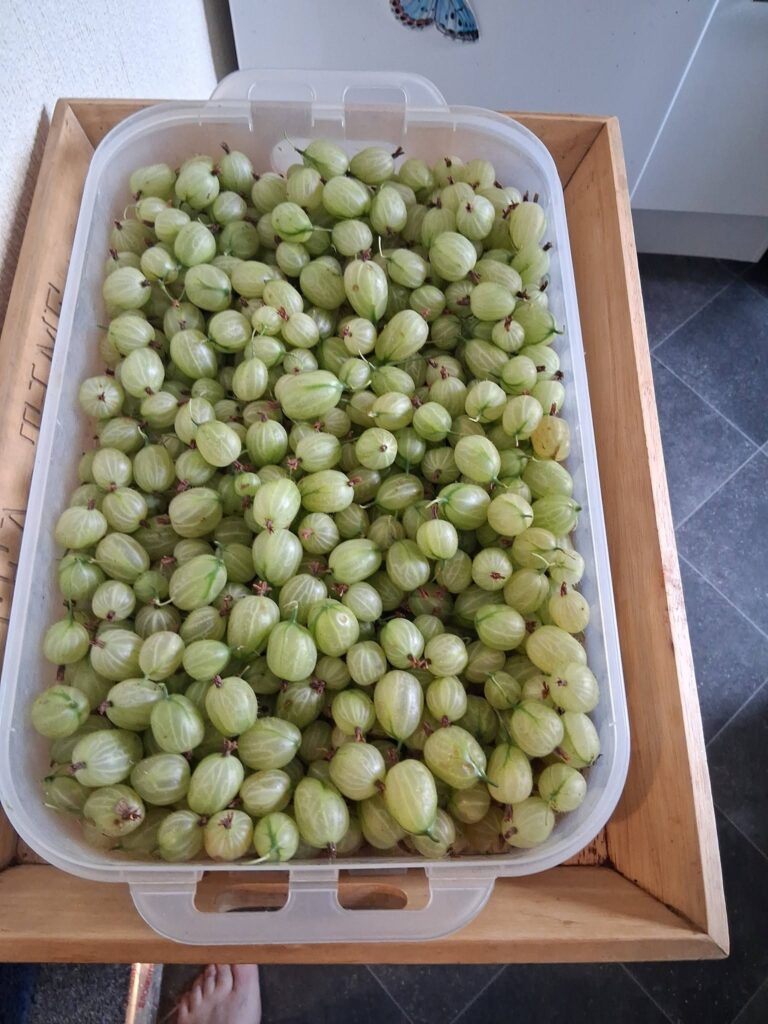
Gooseberry jelly is excellent on toast, scones, yoghurt or porridge, but it is also very good with savoury food. Try it with pork, sausages, cheese, or stirred into a gravy.
This is one of those preserving recipes that reminds you why gooseberries deserve their place on the allotment. They may be prickly to pick, but they are wonderfully generous in the pan.