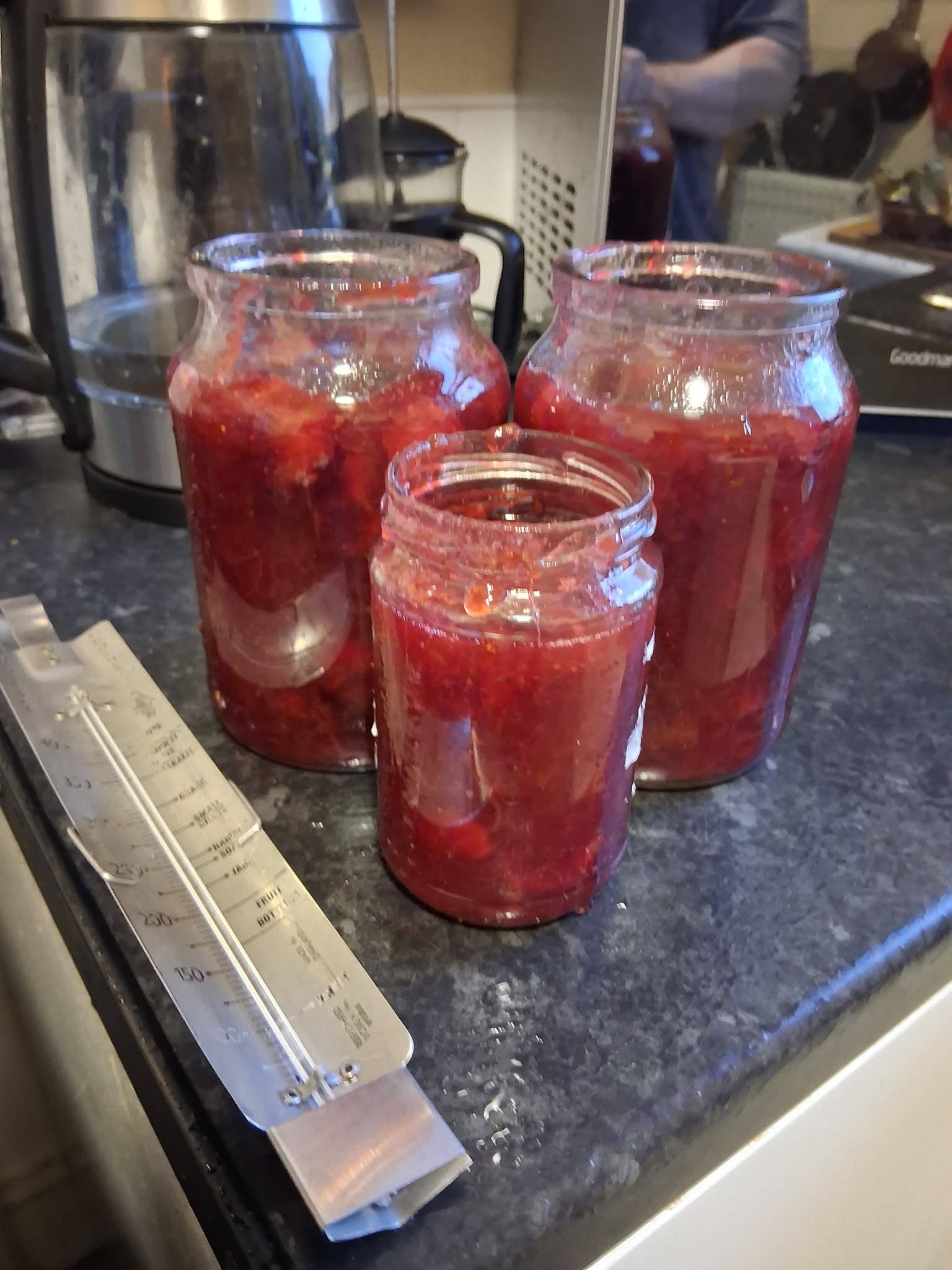
Not every harvest comes into the kitchen looking like it belongs on a magazine cover. Some strawberries are a little soft. Some rhubarb sticks are a bit woody. Some gooseberries are sharp enough to make your eyes water.
This is where jam earns its keep.
The preserving pan is one of the great rescuers of the kitchen garden. Fruit that might be past its best for eating fresh can still become something fragrant, sharp, sweet and deeply satisfying.
In this jam, the gooseberries bring pectin and tang, the strawberries bring perfume and colour, and the rhubarb brings a lovely acidity. Together they make a proper summer allotment jam.
Ingredients
A good working ratio is:
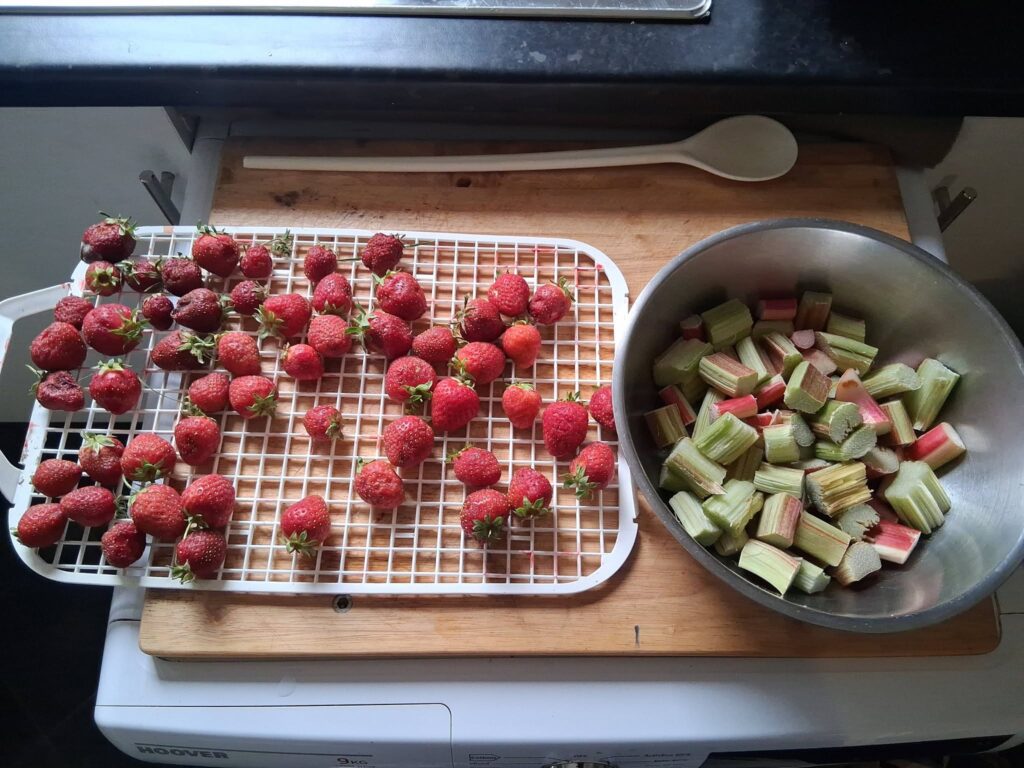
- 500g gooseberries
- 500g strawberries
- 250g rhubarb
- 1kg sugar
Optional:
- Juice of ½ lemon
- A small knob of butter to reduce foaming
- A little chopped crystallised ginger
You can adjust the fruit depending on what you have. More gooseberry makes it sharper and better set. More strawberry makes it softer and more fragrant. Rhubarb adds body and bite.
Method
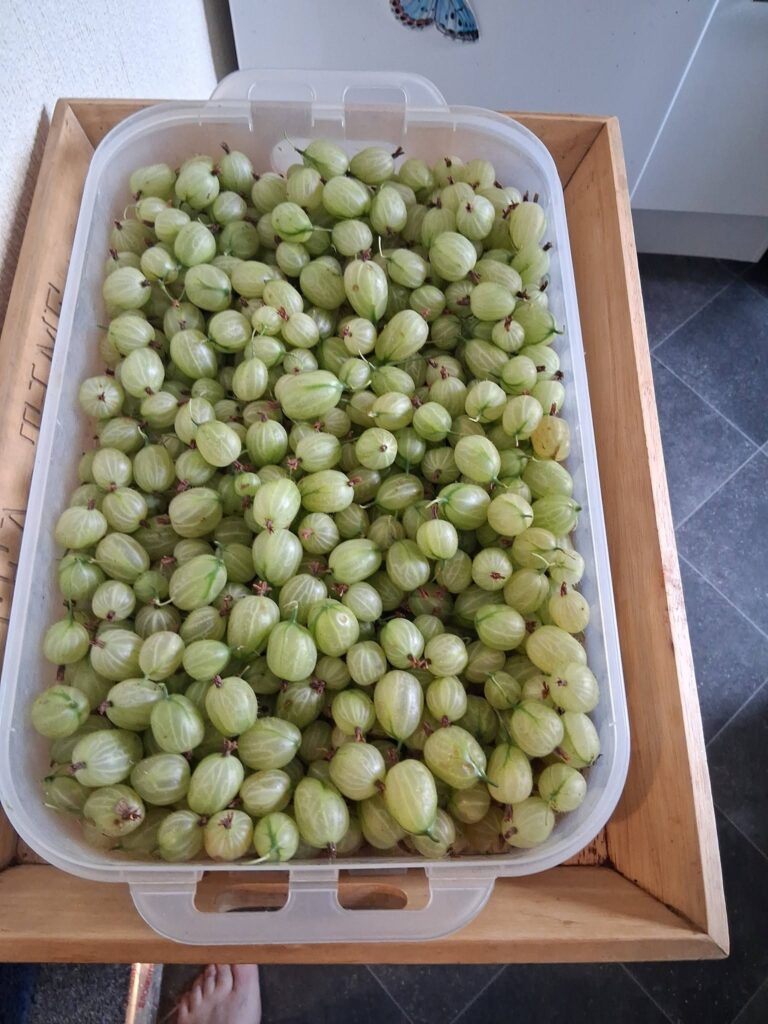
Wash the gooseberries and remove any obvious stalks or leaves. Top and tail if you want a smoother jam, but don’t worry too much.
Hull the strawberries and remove any bruised or tired parts. Do not use mouldy fruit.
Trim the rhubarb. If the sticks are woody, peel away any stringy outer bits and chop the stems into small pieces.
Put the gooseberries and rhubarb into a large pan with a splash of water. Simmer gently until softened.
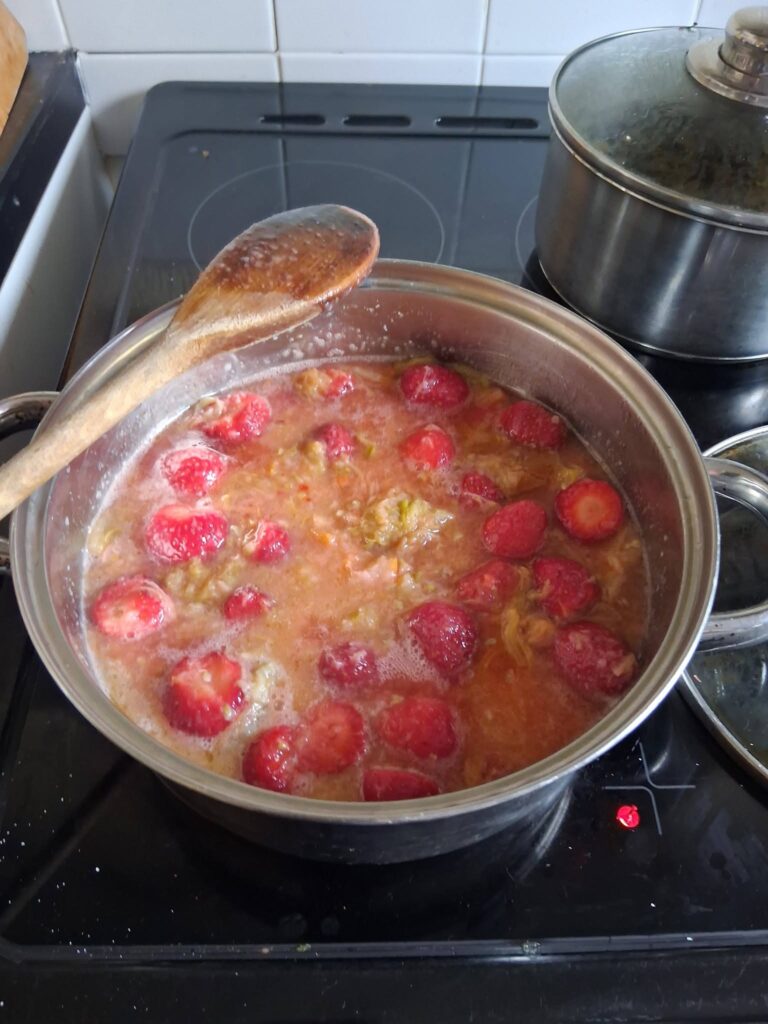
Add the strawberries and cook for a few more minutes until they begin to collapse.
Add the sugar and stir over a gentle heat until dissolved.
Bring to a rolling boil and cook until the jam reaches setting point.
Test on a cold plate: spoon on a little jam, leave for a minute, then push it gently. If it wrinkles, it is ready.
Skim if needed, then pour into warm sterilised jars and seal.
A crystallised ginger version
A little chopped crystallised ginger would be excellent here, especially with the rhubarb and gooseberries. Add it near the end of cooking so it keeps some of its character.
Do not overdo it — a tablespoon or two is enough for a small batch.
Notes from the kitchen
This jam should be sharp-sweet rather than sugary-sweet. It will be lovely on toast, stirred into porridge, spooned over yoghurt, or used in a sponge cake.
It is also a good reminder that fruit does not have to be perfect to be valuable. The plot gives what it gives, and sometimes the best recipes come from working with what is in front of you.