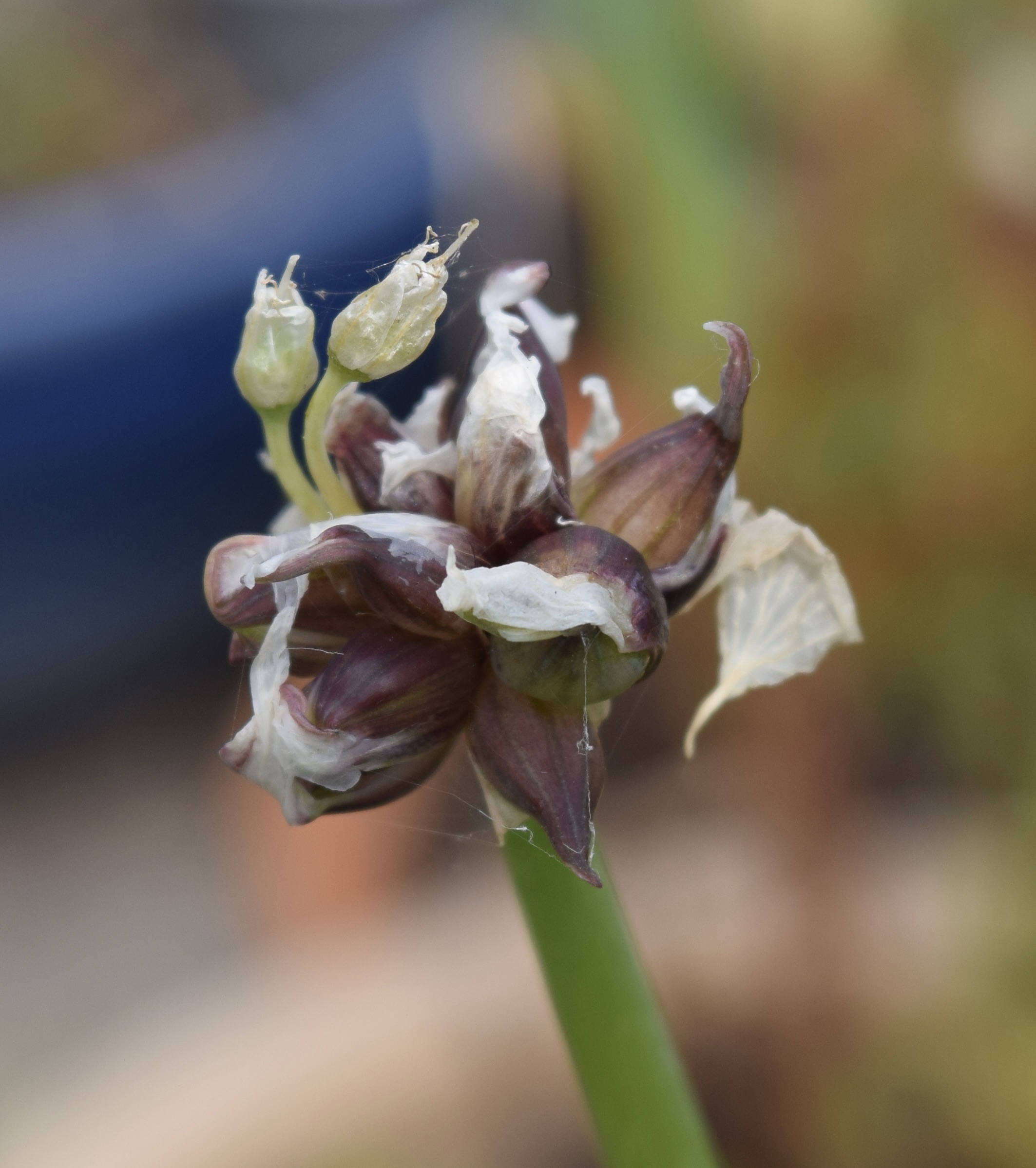
I found these creeping onion bulbs in a bag ..they looked alive and ready to go — not ideal that they’ve sprouted in a bag, but actually quite usable. Creeping onions / walking onions / Egyptian onions are tough little things, so I planted them rather than waste them.
The best approach is:
Plant them outside, either in a spare patch of allotment bed, a planter, or even a nursery corner. Set each little onion/bulbil so the base is just tucked into the soil and the green shoots are pointing upward. Don’t bury them deeply — think barely covered to half covered, rather than planted like a tulip bulb.
Give them roughly 15–20 cm spacing if you want them to form a clump. They will eventually multiply, so don’t put them somewhere you need to keep very tidy unless you’re prepared to lift and divide them later.
Because they’d already sprouted, I did this
- Separate them gently if they come apart easily. Don’t force them if they are still tightly joined.
- Trim off any dry papery bits, but leave the roots/shoots alone.
- Plant into loose compost/soil.
- Water them in well.
- Keep them moist for the first week or two while they re-root.
They are perennial onions, so the idea is not really to get one big onion bulb. They’ll form a patch, produce green onion leaves, then flower stalks with little bulbils at the top. Those bulbils eventually bend down and “walk” across the bed — hence the name.
What about growing in a pot?
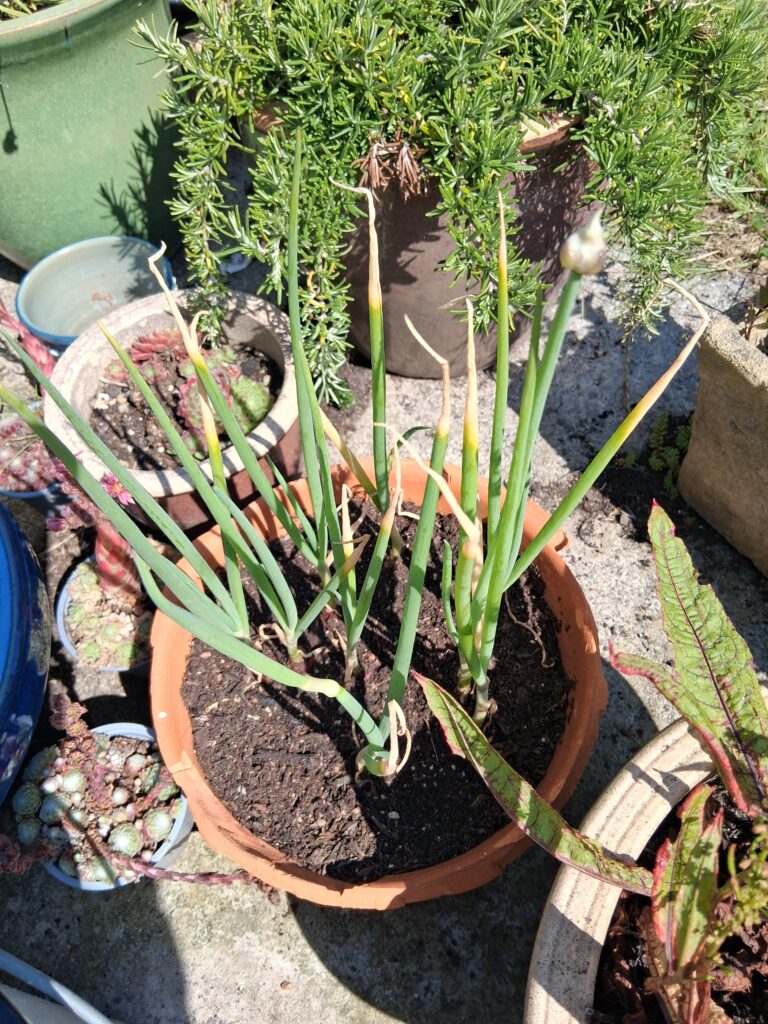
a pot is a very good way to grow creeping/walking onions, especially if you want to keep them contained and stop them wandering around the bed.
Use a fairly deep pot, ideally at least 25–30 cm across and 20–30 cm deep. They do not need anything fancy, but they appreciate room to form a clump.
Fill it with a free-draining compost mix. Something like peat-free compost with a little grit, perlite, sharp sand, or old potting compost mixed in would be fine. They dislike sitting wet and soggy, especially over winter.
Plant the sprouted bulbils/shoots so that the base is just into the compost, with the green shoots above the surface. Firm them in gently and water them once.
For a pot that size, I’d plant maybe 5–7 of those small bulbils, spaced around the pot. They will bulk up and multiply over time.
Best position: outside in good light, ideally sun or part sun. They are hardy, so they do not need to be indoors. In fact, they’ll be happier outside than on a windowsill.
Aftercare is simple: keep them watered while they establish, then only water when the pot starts drying out. In spring and summer, give an occasional liquid feed or a top-dressing of compost. In winter, keep the pot somewhere it drains well and does not sit in a saucer of water.
The nice thing about pot-growing is that you can treat it like a little perennial onion tub. Harvest some green shoots, let the plants form their odd little top-set onions, then either let them drop into the pot or collect them to start new pots.