Originally shared July 2023

Elephant garlic is one of those crops that always sparks a bit of curiosity on the allotment.
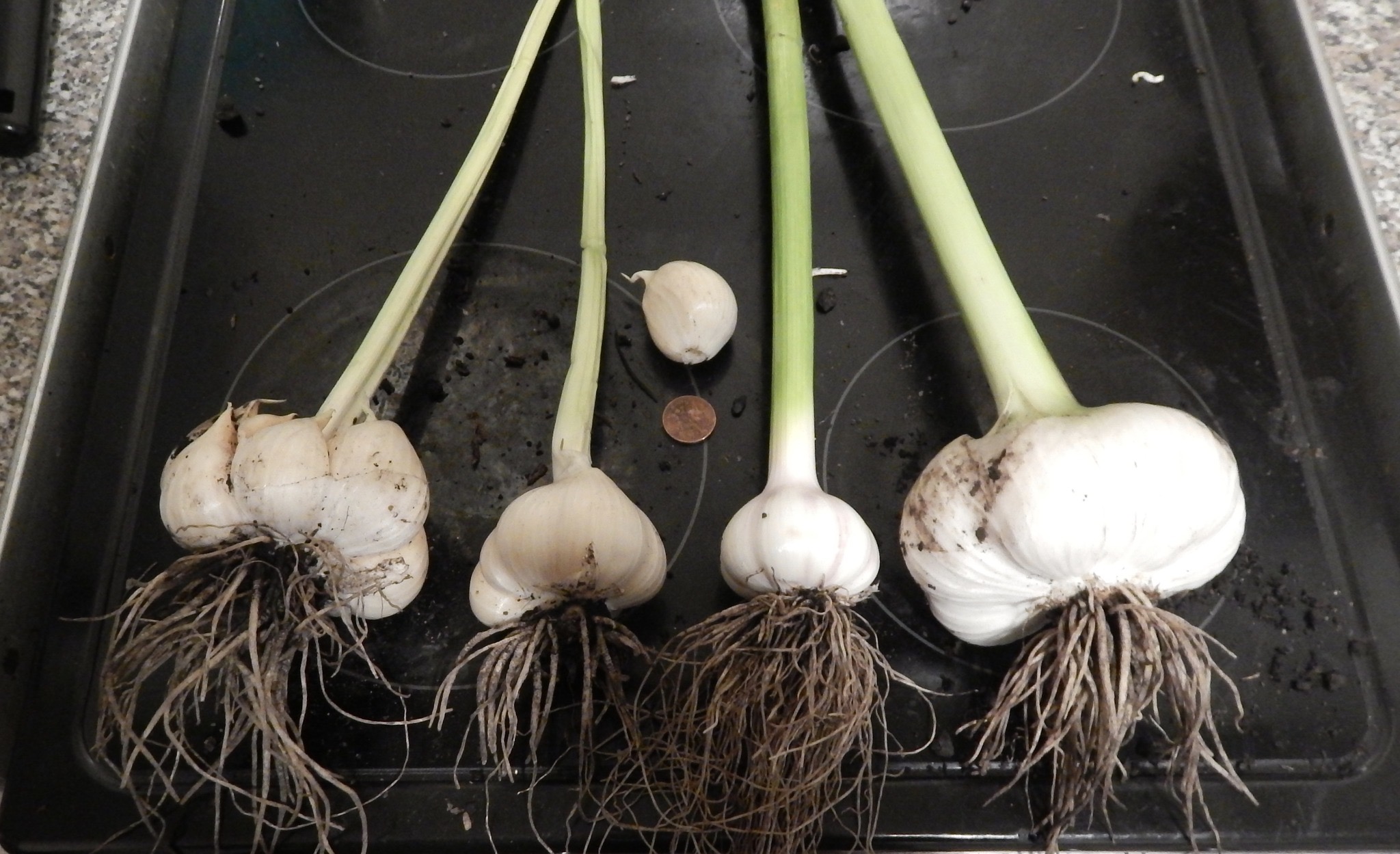
At first glance it looks like oversized garlic — but it’s actually more closely related to leeks. What makes it especially interesting is that it grows in two different forms: large cloves and small corms.
The corms (shown in the jar for scale) are about the size of a shelled hazelnut, while the largest cloves can be closer to a small tangerine.
🌿 What’s the difference?
- Cloves
These are what you plant if you want a proper bulb the following year. - Corms
These take a bit more patience. In their first year they usually grow into a single round bulb (not segmented), then divide into cloves the following season.
👉 In other words:
Corms are a slower but very satisfying way to build up your stock over time.
🌱 Grow it yourself
- Planting time: October–November (ideal for Edinburgh conditions)
- Spacing: 15–20 cm apart
- Soil: Free-draining and fertile (they don’t like sitting wet)
- Position: Full sun if possible
If bulbs start to push up above the soil (as they sometimes do), just gently cover them again with a bit of mulch or compost — exactly the sort of small job that pays off later.
🍳 Cook it yourself
Elephant garlic has a milder, slightly sweeter flavour than regular garlic.
That makes it perfect for:
- Roasting whole cloves
- Adding to soups and stews
- Slicing into pasta dishes
- Or even using raw where normal garlic might be too strong
👉 It’s a great “gateway garlic” for people who find standard garlic a bit overpowering.
🌼 From the early days of the plot
This was one of those small but memorable discoveries — realising that even something as familiar as garlic can still surprise you.
💬 Part of our early allotment notes, first shared in the community Facebook group.