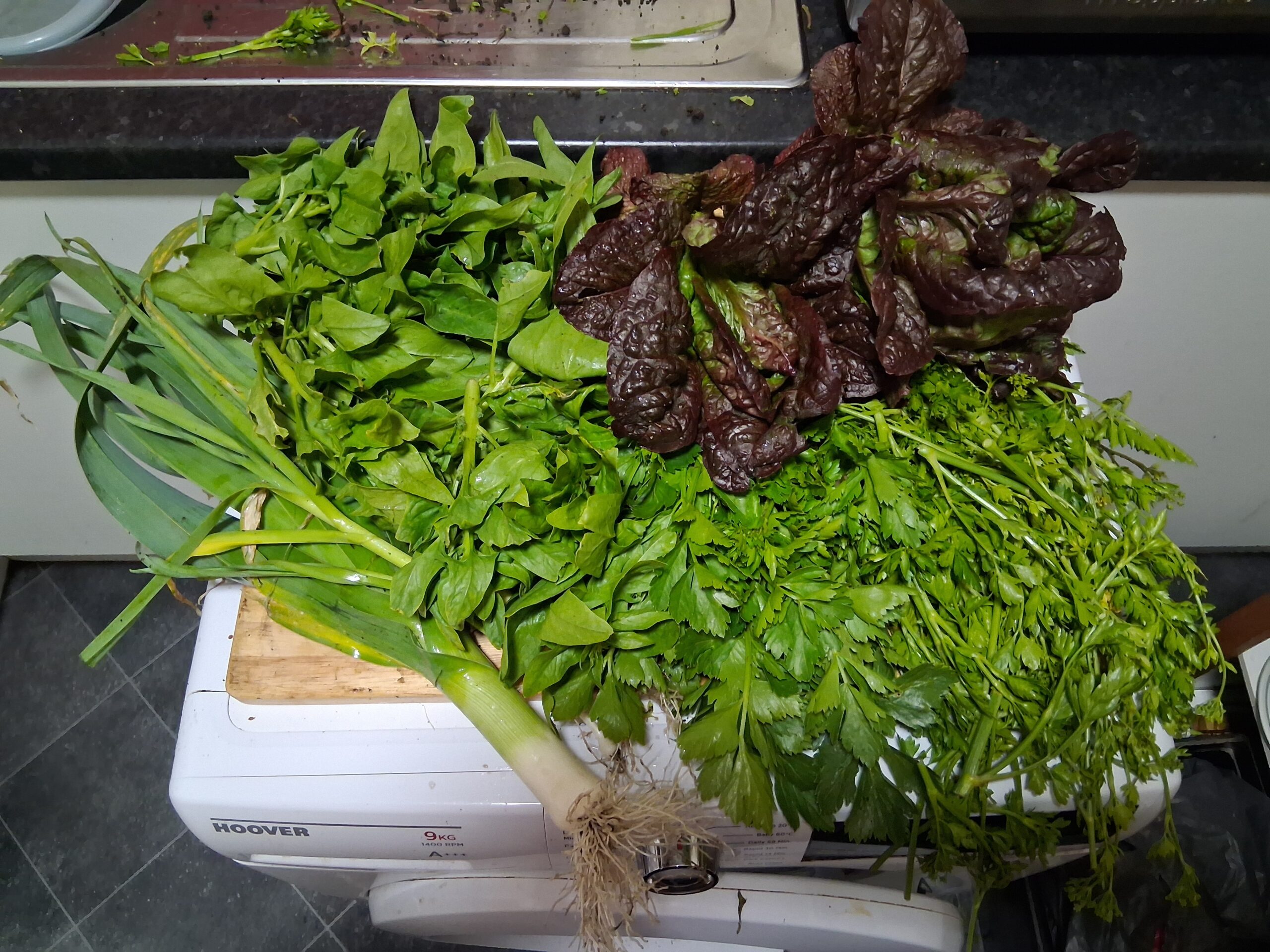
The spinach and the perpetual spinach that was cut back had all bolted dramatically when I returned today so i cut it all back again— the leafy green parts are still edible, even though the spinach and perpetual spinach have bolted.
What changes after bolting is mainly texture and flavour:
Still worth eating
- The younger, softer leaves
- Tender shoot tips
- Small side leaves on the flower stems
- The greener, less stringy parts of the stems if chopped finely
Probably not worth keeping
- Thick, hollow, tough stems
- Any coarse flowering stalks
- Anything that tastes very bitter or fibrous
- Yellowing, slimy, or damaged leaves
To prepare strip the leaves from the main stems, give them a very thorough wash, then cook rather than use raw. Bolted spinach can be a bit more assertive, but it is often perfectly good in saag, soup, dal, omelette/frittata, stir-fry, pasta sauce, or mixed into potatoes.
A good test is: nibble a small raw piece. If it is just earthy or slightly bitter, cooking will usually tame it. If it is harsh, metallic, or unpleasantly bitter, compost the worst bits.
For the plant: cutting it back again may give you a little more regrowth, especially with perpetual spinach, but once true spinach has bolted hard it is often on its way out.
You can plant more spinach, but I’d be a bit cautious now. In Scotland it is possible, but ordinary spinach often bolts quickly once days are long and the weather warms up — exactly what ours has just done.
For my situation, I’m going to try this:
1. Try a small sowing of true spinach anyway
Sow a short row or a few modules somewhere cooler, with a bit of shade if possible. Keep it watered and pick it young as baby leaves. Treat it as a quick crop, not a long-term one.
2. Definitely sow more perpetual spinach / chard
This is the safer bet. Perpetual spinach is really leaf beet, so it copes better with summer than true spinach and should give you cut-and-come-again leaves for much longer. It is ideal for your saag-style cooking.
3. Add something else for summer leaves
Good alternatives now would be:
- Chard / perpetual spinach — best practical replacement
- Kale, especially dwarf or curly kale — slower, but reliable
- Lettuce, especially in partial shade
- Endive or chicory — good if you fancy slightly bitter salad leaves later
- Rocket or mustard greens — quick, but may also bolt if hot
- New Zealand spinach — excellent summer spinach substitute, though less common