Reading a Seed Packet
Why it matters — especially for organic growing and seed sharing
When you first start growing, seed packets can feel a bit like small instruction manuals — full of numbers, dates and technical terms.
But once you understand them, they become one of the most useful tools you have.
This is especially true when working with organic seeds and sharing seeds within a community.
🌱 What’s on a seed packet?
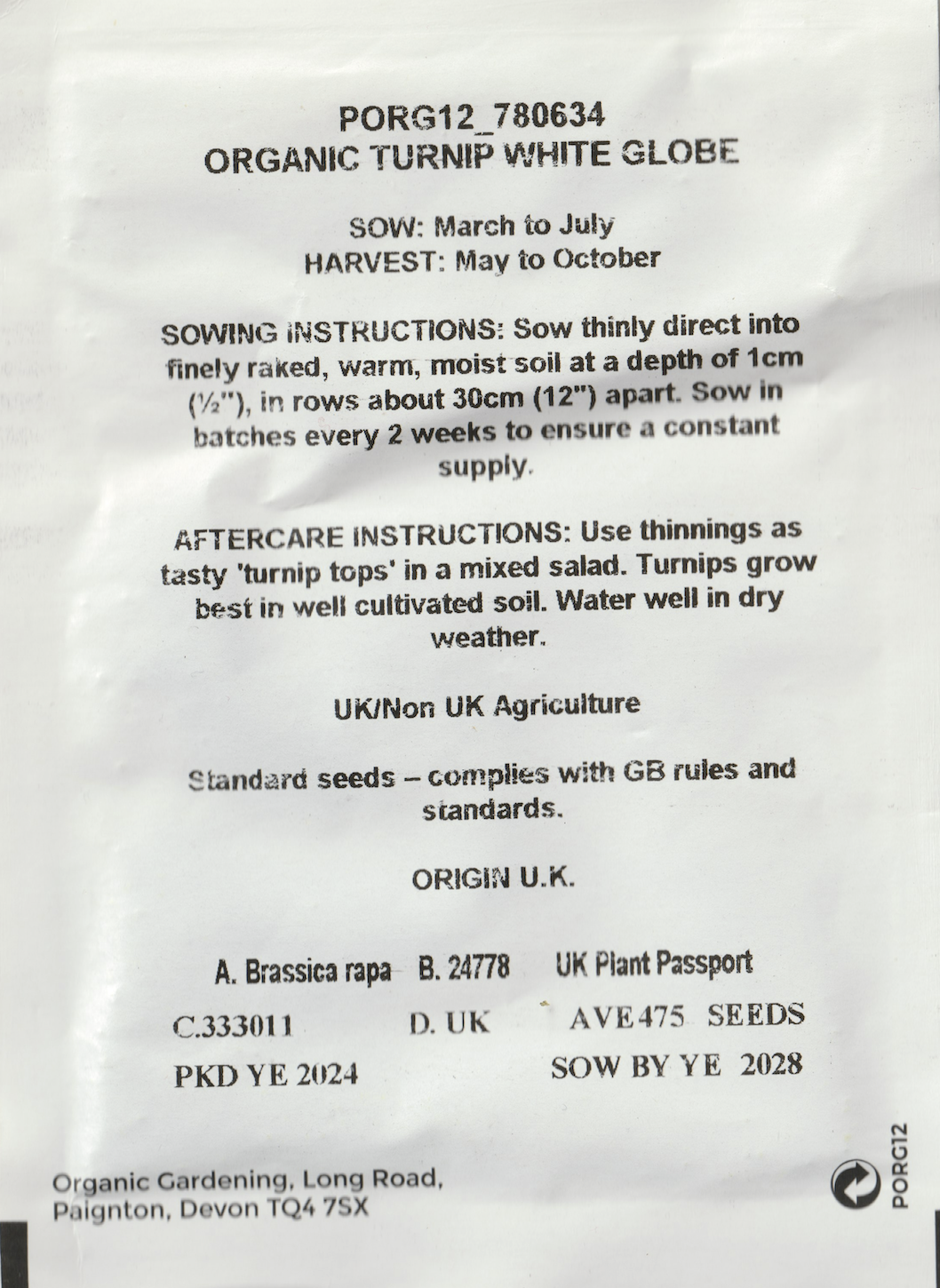
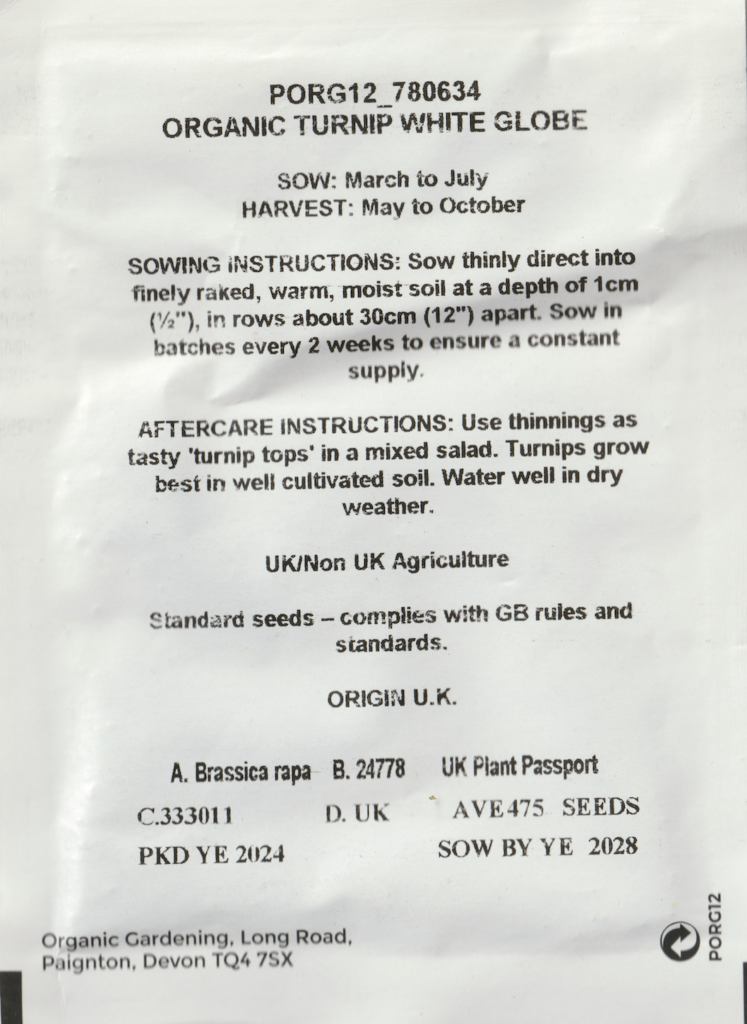
Let’s take an example like this Organic Turnip – White Globe packet.
📅 Sowing & harvesting times
- Sow: March to July
- Harvest: May to October
👉 This tells you:
- when the soil is warm enough
- how long the crop will take
In Edinburgh, this is spot on for sowing now 👍
📏 Spacing & depth
- Depth: 1 cm
- Rows: 30 cm apart
👉 This matters more than people think:
- too deep → poor germination
- too crowded → small roots
🔁 Succession sowing
“Sow in batches every 2 weeks”
This is one of the best tips on any packet.
👉 Instead of one big harvest:
- you get a steady supply
- perfect for allotment growing
🌿 Aftercare info
- Use thinnings as salad
- Keep soil moist
👉 These little notes are gold:
- tell you how to use the whole plant
- and avoid common mistakes
🔍 What do all the codes mean?
Seed packets also include a range of codes and abbreviations. These aren’t random — they help ensure quality and traceability.
🧬 Botanical name
Example: Brassica rapa
A universal plant name used worldwide to avoid confusion between varieties.
🔢 Batch / lot numbers
Codes like:
- B. 24778
- C.333011
These identify the exact batch of seeds.
👉 If there’s ever a problem, it can be traced back.
🌍 Origin
Example:
- Origin: UK
Seeds grown locally are often better suited to local conditions.
🪪 Plant passport
You may see:
- UK Plant Passport
This is part of plant health regulations.
👉 It helps prevent the spread of pests and diseases.
📦 “Standard seeds”
This is a legal category.
👉 It means the seeds meet required standards for:
- germination
- purity
- correct variety
📅 Dates
You might see:
- Packed: 2024
- Sow by: 2028
Seeds don’t suddenly expire, but germination rates drop over time.
🌍 Organic Seeds
Organic seed packets add another layer:
- Grown without synthetic chemicals
- Often better suited to natural growing methods
- Support biodiversity and soil health
a more sustainable way of gardening.
🔁 Seed Sharing & Community Growing
One packet often contains far more seeds than one person needs.
That opens the door to:
- Sharing with neighbours
- Swapping varieties
- Saving seed for future seasons
👉 Over time, this builds a local knowledge of what grows well.
🌱 A Simple Approach
When you open a new packet:
- Check the sowing window
- Prepare your soil
- Sow a small amount
- Label what you’ve planted
- Come back and sow more later
🌿 From Packet to Plot
A seed packet isn’t just instructions — it’s:
- a growing guide
- a seasonal calendar
- and the start of something new
💬 Join in
If you’ve got favourite varieties, spare seeds, or tips from your own growing:
👉 share them on the plot or in the comments
Let’s build a proper community seed bank 🌱
🪴 This is a personal project and not affiliated with any organisation.
Content shared under a Creative Commons licence where stated.
Organic seed packets usually mean:
- 🌱 Grown without synthetic chemicals
- 🌾 Often more resilient in real soil conditions
- 🐝 Better for biodiversity