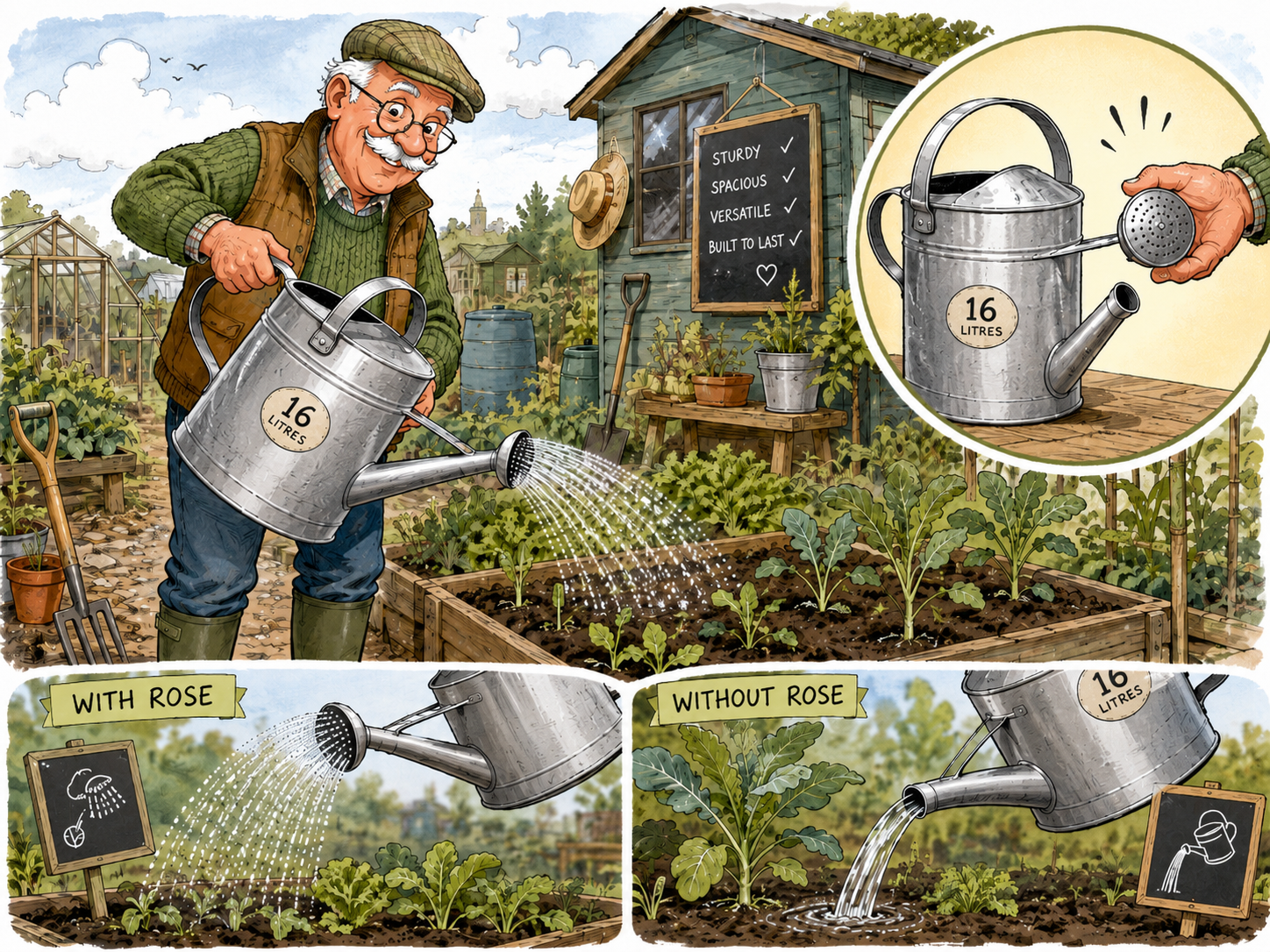
There are few things that make an allotment feel more purposeful than walking down the path with a full watering can in hand.
It is one of those small rituals that makes us feel like gardeners. We have arrived. We have noticed. We are doing our bit.
But watering is not quite as simple as giving the plants a drink and heading home with a clear conscience. There is a fine art to it — part practical skill, part observation, part restraint, and part remembering that water is not just something that comes out of a tap.
Water is life, obviously. But on an allotment it is also labour, timing, judgement, soil care, climate care, and occasionally a mild upper-body workout.
Plants Need Water — But They Also Need Air
The first thing to say is that plants do not simply need “more water”. They need the right amount of water, in the right place, at the right time.
Roots need both moisture and air. Soil that is bone dry for days and then suddenly drowned is stressful. Soil that is permanently waterlogged is also a problem because roots can suffocate and rot.
This is why a good watering routine is not about panic-watering everything every time the sun appears. It is about learning to read the soil and the plants.
A slightly droopy courgette on a hot afternoon may simply be sulking in the heat and could perk up again by evening. A young lettuce in a shallow planter, however, may genuinely be crying out for help. Seedlings and newly planted crops need more careful attention than established plants with decent root systems.
The finger test is still one of the best tools we have. Push a finger into the soil. If it is dry below the surface, water. If it is still cool and damp, pause. The surface can look dusty while the soil below is still perfectly usable.
When to Water
The best time to water is usually early morning.
Morning watering gives plants moisture to draw on through the day and reduces the amount lost to evaporation. It also means leaves are less likely to sit wet overnight, which can encourage fungal problems.
Evening watering is sometimes unavoidable, especially if you are coming to the plot after work, and it is far better than letting newly planted crops collapse. But where possible, aim the water at the soil rather than the leaves.
Watering in the middle of a hot sunny day is usually the least efficient time. Much of the water evaporates before it gets to where it is needed, and a light splash over the surface can make us feel virtuous without doing the plant much good.
How to Water
Water the soil, not the plant.
Leaves may enjoy a little theatrical shower in the moment, but the roots are where the real work happens. A watering can rose is useful for seedlings and loose soil, but for bigger plants it is often better to remove the rose and direct water slowly around the base.
The aim is to soak deeply rather than sprinkle lightly.
A quick daily sprinkle encourages shallow roots. A proper soak encourages roots to grow down, making the plant more resilient when the next dry spell comes. This is especially important for crops like courgettes, beans, peas, fruit bushes and brassicas.
Containers and raised planters are a different matter. They dry out faster than open ground, especially in wind. A pot in full sun may need water when the bed beside it does not. This is something we learn quickly when growing courgettes in pots in a Scottish summer that somehow manages to be both windy and dry.
What Needs Water Most?
Some plants are thirstier than others, and some stages of growth matter more.
Seedlings need steady moisture because they have tiny roots. Newly transplanted plants need watering in well so their roots make contact with the soil. Fruiting plants need reliable moisture when they are swelling crops.
Courgettes, cucumbers, beans, peas, tomatoes, strawberries and leafy salads will all struggle if they are allowed to dry out at the wrong moment. Lettuce can bolt, beans can stop setting, peas can sulk, and courgettes can go from promising to tragic with surprising speed.
Root crops are slightly different. Carrots and parsnips do not want to be endlessly fussed over, but if they become very dry and then suddenly get soaked, they can split. Turnips and kohlrabi appreciate steady growth rather than boom-and-bust treatment.
Fruit bushes, especially newly planted ones, benefit from deep watering in dry spells. Established gooseberries and currants are tougher, but if we want plump fruit rather than shrivelled disappointment, they still appreciate help when rain disappears.
The Magic of Mulch
Watering does not begin with the watering can. It begins with the soil.
No-dig beds, compost, leaf mould, seaweed, grass clippings, comfrey leaves and other mulches all help soil hold onto moisture. A bare soil surface loses water quickly. A mulched surface stays cooler, feeds soil life, and reduces evaporation.
This is one of the reasons no-dig makes so much sense. We are not just being tidy or fashionable. We are building a sponge.
Good soil structure means rain soaks in rather than running off. Organic matter holds moisture without becoming lifeless sludge. Worms and soil organisms create channels and crumbs that make the whole system more resilient.
If watering is the emergency response, mulch is the long-term strategy.
Rainwater Is Better Than Tap Water
Rainwater is free, soft, and usually better suited to plants than treated mains water.
A water butt is one of the best investments for a garden or allotment where it is possible to install one. Even a small amount of stored rainwater can make a difference for seedlings, pots and greenhouse crops.
On communal allotments we also need to think about fairness. The tap is not an infinite private supply. Hoses can be wasteful if left running or used without care. Watering cans slow us down, but that can be a good thing. They make us choose. They make us look.
And looking is half of gardening.
Watering Less by Growing Better
The cleverest watering is sometimes the watering we do not need to do.
We can reduce demand by:
- adding compost and organic matter
- mulching around plants
- planting at sensible spacings
- choosing crops suited to the site
- shading seedlings in extreme heat
- watering deeply rather than often
- grouping pots together to reduce drying winds
- using saucers under containers where appropriate
- keeping weeds down so they are not taking moisture from crops
We can also accept that not everything needs saving. Lawns and rough grassy paths often recover after rain. A few tired outer leaves are not a disaster. Plants are not ornaments; they live in weather.
Water as a Planetary Issue
It is easy, standing on a damp Scottish allotment, to forget that water is one of the great questions of our time.
We are lucky. Even when we grumble about the weather, water still arrives in our homes and on our plots with a reliability that much of the world cannot take for granted.
Globally, water is becoming less predictable. Climate change is not only about warmer temperatures. It is about floods, droughts, disrupted seasons, dry soils, overwhelmed drains, and pressure on food systems. Agriculture uses a huge share of the world’s freshwater, and every crop we grow, buy, waste or save is part of that wider story.
This is not a reason to feel guilty every time we fill a watering can. It is a reason to be attentive.
The allotment is a small place, but it teaches big lessons. It teaches us that soil matters. That rain matters. That waste matters. That resilience is built slowly. That abundance depends on care.
When we collect rainwater, mulch a bed, improve the soil, share crops, avoid wasting food, or choose not to drench a path just because the hose is in our hand, we are practising a more respectful relationship with water.
Not perfect. Just better.
A Practical Watering Rhythm
A useful routine is:
- Look first.
- Check the soil below the surface.
- Prioritise seedlings, pots, new plantings and fruiting crops.
- Water deeply at the base.
- Mulch where possible.
- Leave established plants alone unless they genuinely need help.
- Notice what dries out fastest and adapt next time.
There is no single rule that fits every crop, every bed and every week. The art is in the noticing.
See also – choosing a watering can